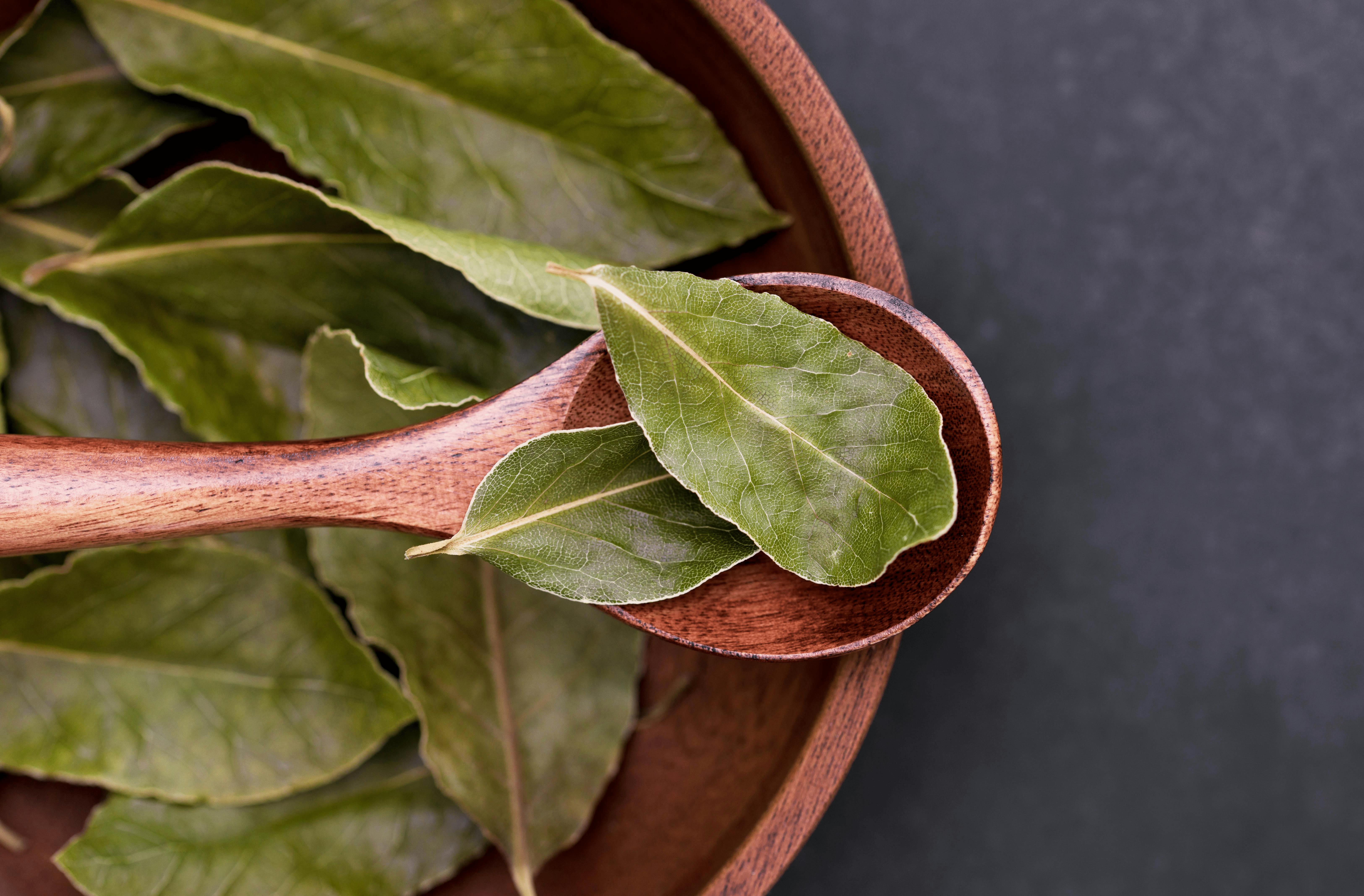
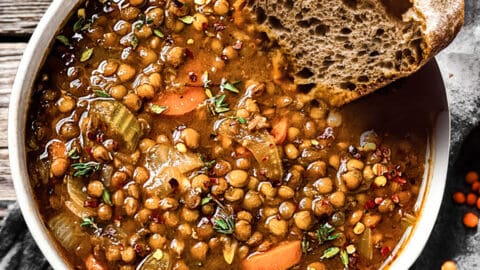
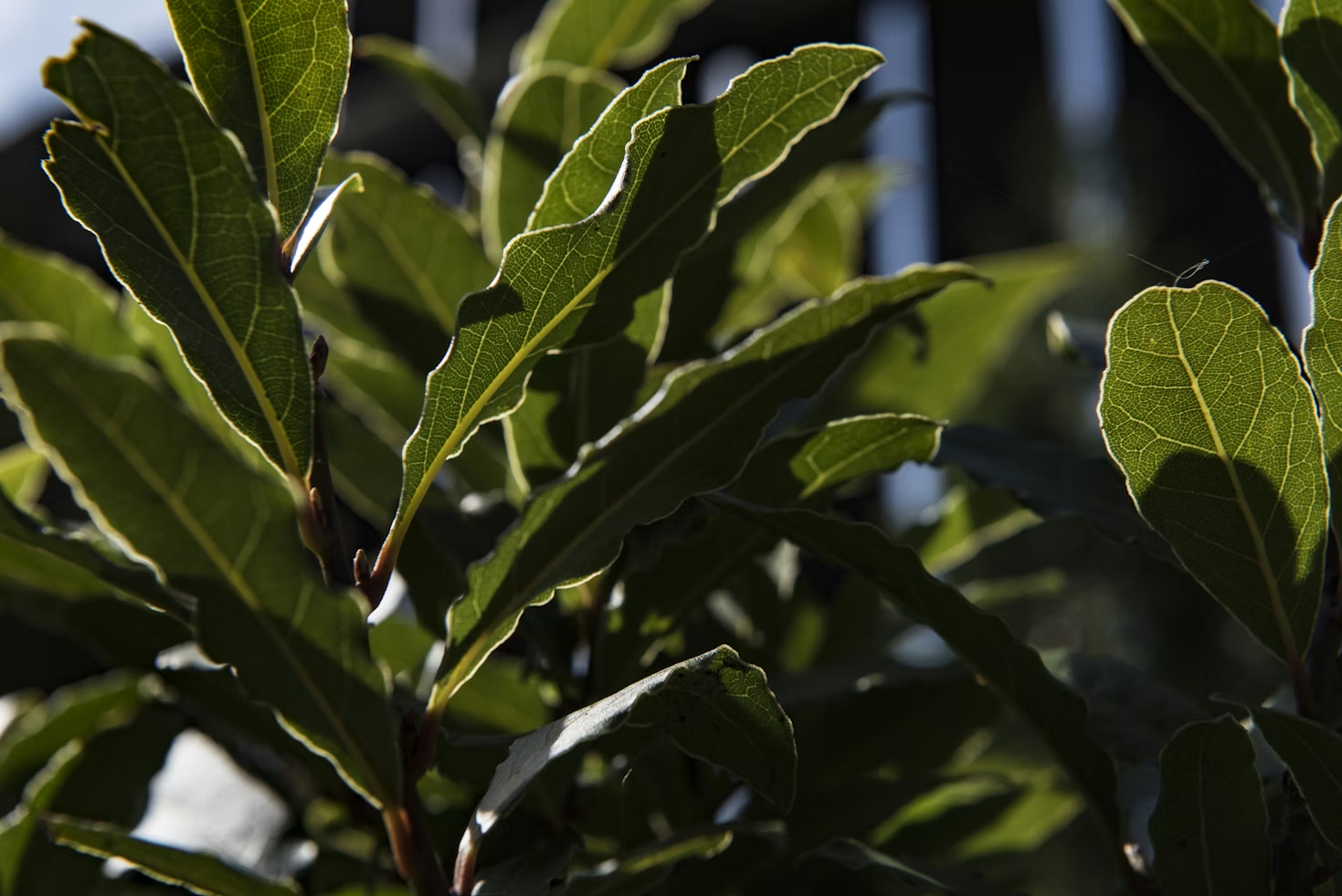
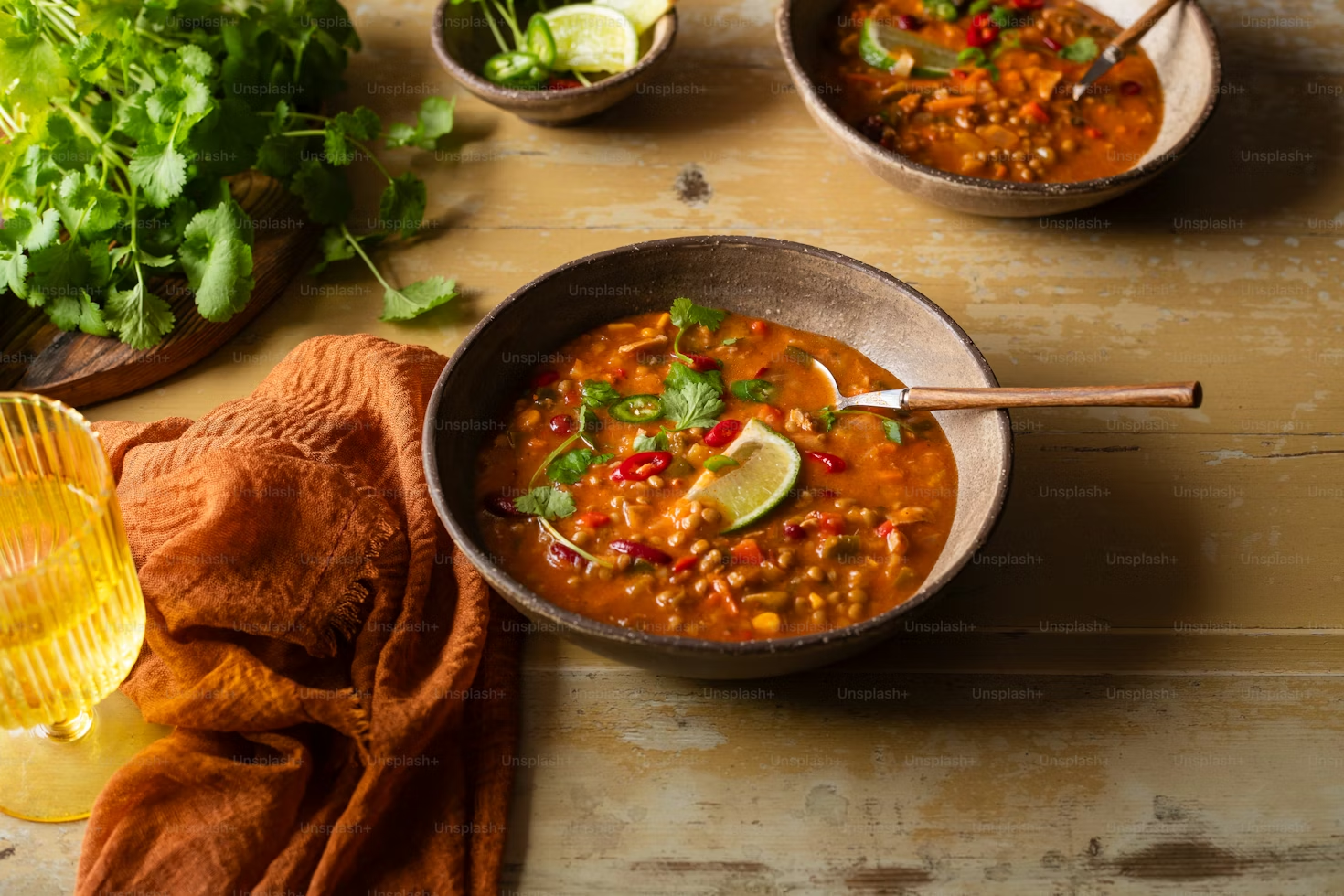
A bay leaf adds a subtle, earthy flavor that deepens the overall taste of a classic lentil soup as it
simmers. As the soup cooks, the bay leaf slowly releases aromatic compounds that create a mild herbal
note
and enhance the savory flavors of the vegetables, lentils, and broth. It doesn’t overpower the dish, but
instead provides a background layer of flavor that makes the soup taste richer and more balanced. The
bay
leaf is usually added at the beginning of the cooking process and removed before serving, since it is
tough
and not meant to be eaten.
Recipe
Ingredients:
1 cup dried lentils, rinsed
1 onion, diced
2 carrots, diced
2 stalks celery, diced
3 cloves garlic, minced
1 bay leaf
1 can (14 oz) diced tomatoes
6 cups vegetable broth
2 tbsp olive oil
1 tsp ground cumin (optional but great)
Salt and black pepper to taste
Optional: chopped parsley or a squeeze of lemon
Instructions:
Prepare the ingredients. Rinse 1 cup of dried lentils under cold water and drain them. Dice the
onion,
carrots, and celery, and mince the garlic.
Cook the vegetables. Heat 2 tablespoons of olive oil in a large pot over medium heat. Add the diced
onion and cook for about 3–4 minutes until it becomes soft and translucent.
Add the aromatics. Stir in the carrots, celery, and garlic. Cook for another 2–3 minutes until the
vegetables begin to soften and the garlic becomes fragrant.
Add the main ingredients. Pour in the rinsed lentils, diced tomatoes, and vegetable broth. Add 1 bay
leaf and the ground cumin if using.
Simmer the soup. Bring the mixture to a gentle boil, then reduce the heat to low. Cover the pot and
let
the soup simmer for about 25–30 minutes, or until the lentils are tender.
Season the soup. Add salt and black pepper to taste. If you like, you can also add chopped parsley
or a
squeeze of lemon for extra freshness.
Remove the bay leaf and serve. Take out the bay leaf before serving since it is tough and not meant
to
be eaten. Serve the soup warm with bread or crackers.
Mediterranean Chicken with Bay Leaf and Lemon
This Mediterranean-style chicken dish uses bay leaf to bring a gentle herbal depth to the flavor of the
meal.
As the chicken simmers with garlic, olive oil, lemon, and herbs, the bay leaf slowly releases its earthy
aroma into the sauce. The result is a light but flavorful dish that reflects traditional Mediterranean
cooking, where simple ingredients are enhanced with aromatic herbs. The bay leaf blends with the citrus
and
garlic to create a balanced, savory flavor that pairs perfectly with rice, roasted potatoes, or crusty
bread.
Recipe
Ingredients:
2 tablespoons olive oil
4 chicken thighs or chicken breasts
3 cloves garlic, minced
1 small onion, sliced
3 cloves garlic, minced
1 bay leaf
Juice of 1 lemon
1 teaspoon dried oregano
½ teaspoon black pepper
½ teaspoon salt
1 cup chicken broth
Optional: chopped parsley for garnish
Instructions:
Heat the olive oil in a large skillet or pot over medium heat.
Add the chicken and cook for about 4–5 minutes on each side until lightly browned.
Add the sliced onion and garlic and cook for another 2–3 minutes until fragrant.
Pour in the chicken broth and lemon juice.
Add the bay leaf, oregano, salt, and pepper.
Bring the mixture to a gentle simmer, cover, and cook for about 20–25 minutes until the chicken is
fully
cooked.
Remove the bay leaf before serving.
Garnish with parsley and serve with rice, roasted vegetables, or warm bread.
What's New and Exciting!
A Visit to the Country
I went hiking with my friends last weekend at the Camrose Country, where I discovered a beautiful, quiet
picnic spot by a nearby
lake. The air was fresh and full of nature, and there was plenty of open grass—perfect for laying out a
picnic blanket. The distance from the water felt just right, creating a calm and relaxing view. It
turned out to be the perfect place to enjoy a snack featuring one of my latest experiments with bay
leaves.
The Aromatic Cardamom site highlights Aroma of Cardamon (cardamom) https://aromaticcardamom.netlify.app/ as a small but powerfully fragrant spice
often called the “Queen of Spices,” prized in cuisines worldwide for its intense scent and flavor. Its
CardamomFragrance makes it ideal in teas, desserts, and savory dishes, where even a little adds rich,
aromatic complexity. The site also emphasizes the HealthBenefitsOfCardamom, noting this spice’s
antibacterial properties and its traditional associations with heart support, blood sugar control, liver
health, and reduced inflammation. Overall it portrays cardamom as both a sensory delight and a valuable
ingredient for wellbeing. #AromaOfCardamom #CardamomFragrance #HealthBenefitsOfCardamom
Do Bay Leaves Actually Make a Difference?
A recent NPR article explores the ongoing debate about whether bay leaves truly make a noticeable
difference in cooking. Bay leaves are commonly added to soups, stews, sauces, and braised dishes, but
many people are unsure if they actually contribute anything meaningful to the final flavor. The article
examines this question by looking at how bay leaves interact with other ingredients during the cooking
process and why they remain a staple in many kitchens despite the doubt surrounding them.
The article explains that bay leaves do not have a strong or overpowering taste on their own, but they
still play an important supporting role. Instead of adding a bold flavor, they slowly release subtle
aromatic compounds that blend with other ingredients over time. This is especially true in slow-cooked
meals where flavors develop gradually. As the article states, “the difference is subtle, but it’s
there,” showing that even though the impact is not obvious, it is still present in the background of the
dish.
From my perspective, this article helped clarify why bay leaves are often included even when their effect
seems hard to detect. I have used them in my own cooking experiments, especially in soups and rice
dishes, but I never fully understood their purpose. Now I realize that bay leaves are more about
enhancing and balancing flavors rather than standing out. They quietly support the dish rather than
dominate it.
Overall, this article changed how I view simple ingredients in cooking. It made me appreciate that even
small additions can influence a recipe in subtle but meaningful ways. Bay leaves may not be the most
noticeable spice, but they contribute to the overall depth and complexity of a dish, especially when
given enough time to infuse properly.
Cookie Notice: We use cookies to offer you a better browsing experience, analyze site
traffic, personalize content, and gather information to improve your experience. Read about how we use
cookies and how you can control them by clicking here.